
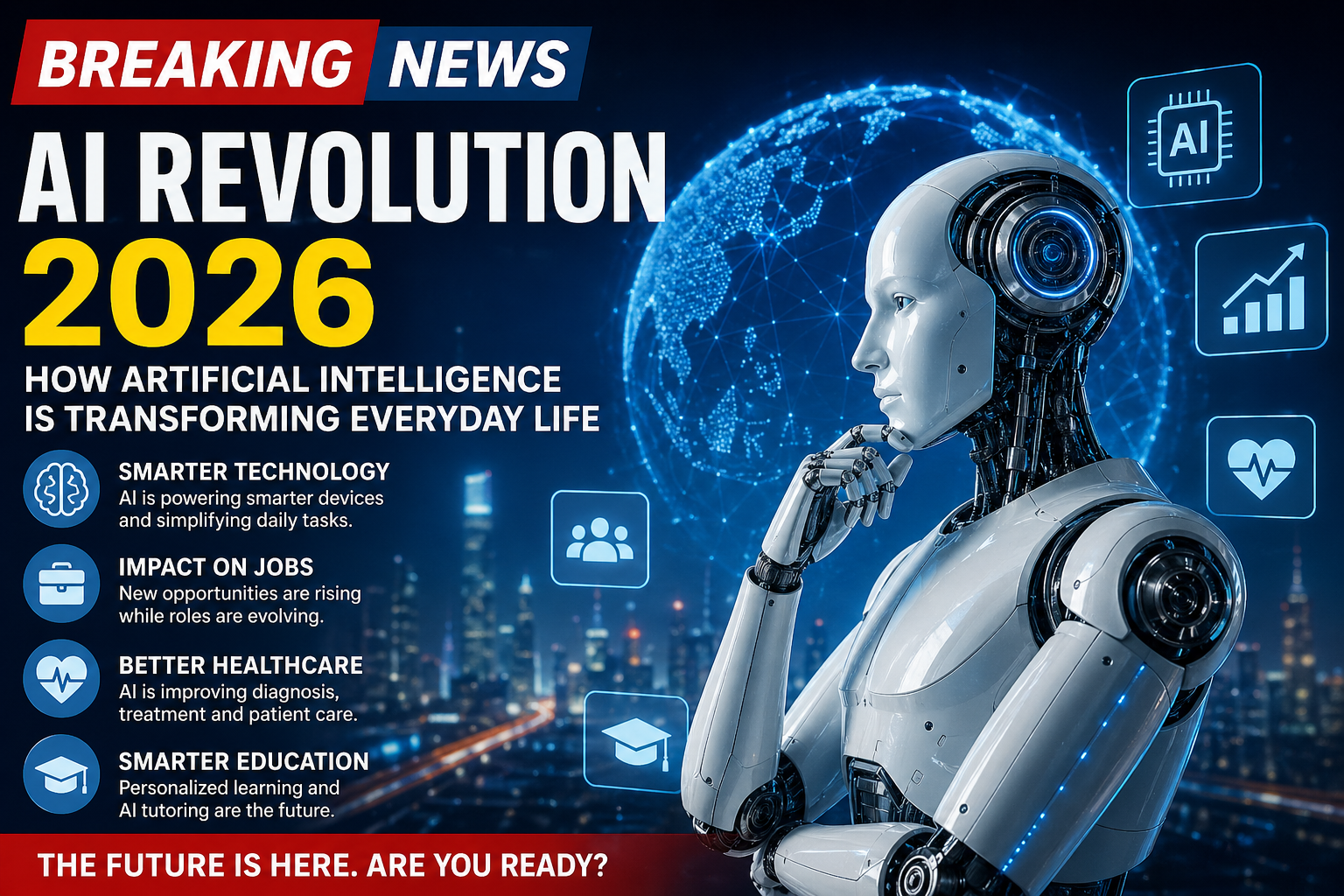
Artificial Intelligence (AI) has rapidly evolved from a futuristic concept into a powerful force shaping the modern world. In 2026, AI is no longer limited to tech companies or research labs—it is now embedded in everyday life. From smartphones and virtual assistants to healthcare systems and financial platforms, AI is transforming how people live, work, and interact.
The growing influence of AI is not just a technological shift—it is a global transformation affecting economies, industries, and societies. As businesses and individuals increasingly rely on AI-driven tools, understanding its impact has become more important than ever.
 The Rise of AI in Daily Life
 The Rise of AI in Daily Life
AI is now present in almost every aspect of our daily routines. Whether it’s personalized recommendations on streaming platforms, voice assistants managing schedules, or smart home devices controlling lighting and temperature, AI is quietly working behind the scenes.
Smartphones today use AI for facial recognition, camera enhancements, and predictive text. Navigation apps analyze traffic patterns in real time, helping users reach their destinations faster. Even social media platforms rely on AI algorithms to show users content based on their interests and behavior.
This widespread integration has made AI an essential part of modern living, often without users even realizing it.
AI in Business and Industry
Businesses across the globe are adopting AI to improve efficiency, reduce costs, and enhance customer experiences. In 2026, AI-driven automation has become a key competitive advantage.
Key Business Applications:
- Customer Support: Chatbots and virtual assistants handle queries 24/7
- Data Analysis: AI processes large datasets to provide insights
- Marketing: Personalized ads and targeted campaigns
- Operations: Automation of repetitive tasks
Companies are also using AI to predict market trends, manage supply chains, and optimize decision-making processes. This has led to faster growth and improved productivity across industries.
Impact on Jobs and Workforce
One of the most discussed aspects of AI is its impact on jobs. While AI is creating new opportunities, it is also replacing certain traditional roles.
Jobs at Risk:
- Data entry operators
- Customer service representatives
- Basic administrative roles
New Opportunities:
- AI specialists
- Data scientists
- Machine learning engineers
- Digital content creators
The shift is not about job loss alone—it is about transformation. Workers are now required to adapt and learn new skills to stay relevant in the evolving job market.
AI in Healthcare
Healthcare is one of the sectors benefiting the most from AI advancements. In 2026, AI is helping doctors diagnose diseases faster and more accurately.
Key Uses in Healthcare:
- Early detection of diseases
- Personalized treatment plans
- Robotic surgeries
- Medical data analysis
AI-powered systems can analyze medical reports within seconds, reducing human error and improving patient outcomes. Telemedicine platforms are also using AI to provide remote consultations, making healthcare more accessible.
AI in Education
Education is undergoing a major transformation with the help of AI. Students now have access to personalized learning experiences tailored to their needs.
How AI Is Changing Education:
- Smart tutoring systems
- Automated grading
- Customized learning paths
- Virtual classrooms
AI tools help students learn at their own pace, making education more effective and inclusive. Teachers also benefit from automation, allowing them to focus more on teaching rather than administrative tasks.
AI in Content Creation
Content creation has seen a massive shift due to AI. Bloggers, YouTubers, and marketers are now using AI tools to generate ideas, edit videos, and create content faster.
Popular Uses:
- Script writing
- Video editing
- Image generation
- SEO optimization
For creators like you, sir, this is a huge opportunity. AI can help you scale content production and grow your platform faster than ever before.
Challenges and Concerns
Despite its benefits, AI also brings several challenges that cannot be ignored.
Major Concerns:
- Job displacement
- Data privacy issues
- Dependence on technology
- Ethical concerns
There is also the risk of misuse, such as deepfake technology and misinformation. Governments and organizations are now working on regulations to ensure responsible use of AI.
Why AI Matters in 2026
AI is not just a trend—it is the foundation of future innovation. Countries investing in AI are gaining a competitive edge in the global economy. Businesses that adopt AI early are outperforming their competitors.
For individuals, understanding AI is becoming as important as basic digital literacy. Whether you are a student, professional, or entrepreneur, AI knowledge can open new opportunities.
Future of AI
The future of AI looks even more promising. Experts predict that AI will become more advanced, human-like, and capable of solving complex problems.
What to Expect:
- Smarter virtual assistants
- Fully automated industries
- Advanced robotics
- AI-driven innovation
As technology continues to evolve, AI will play a central role in shaping the future of humanity.
Conclusion
Artificial Intelligence is transforming the world at an unprecedented pace. From improving daily convenience to revolutionizing industries, AI is shaping the future in ways we never imagined.
While challenges exist, the benefits of AI far outweigh the risks when used responsibly. The key is to adapt, learn, and embrace this technological revolution.
In 2026 and beyond, AI will continue to redefine how we live and work. Those who understand and leverage its power will be best positioned for success in the digital age.

Sundhanshu Pathania works as a content analyst and writer at Multi News Hub. He focuses on analyzing news trends and writing articles related to global affairs, technology updates, sports, and trending topics.
His role involves reviewing multiple news sources, understanding search behavior, and presenting information in a clear, reader-friendly format. He contributes to the platform by researching topics and ensuring factual clarity in published content.