
By Sundhanshu Pathania
Independent Journalist | World Affairs & Geopolitics
Published: January 6, 2026
Last Updated: January 6, 2026
Category: World News
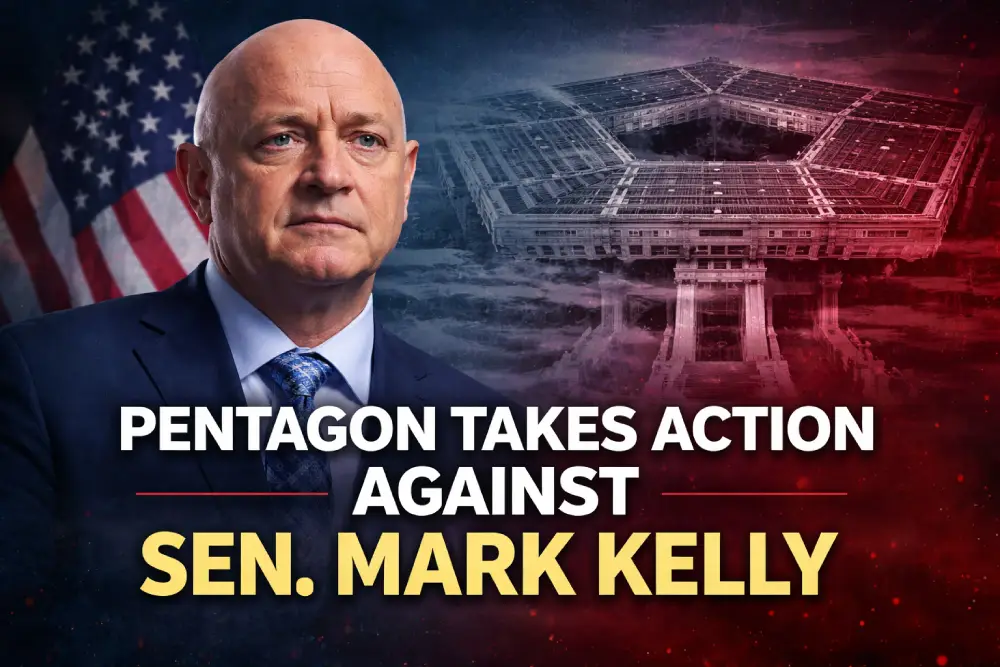
So the Pentagon just made a move that’s got everyone talking. On January 5, 2026, Defense Secretary Pete Hegseth announced formal administrative proceedings against Senator Mark Kelly, according to CNN. An Arizona Democrat, retired Navy Captain, and former NASA astronaut. The action could reduce Kelly’s military retirement rank and cut his retirement pay. People are starting to get excited and speculate in the geopolitics community about what this means for military oversight and congressional independence.
Similar questions around military authority and political fallout have surfaced globally in recent months, including during the Venezuela military intervention and its regional impact.
But what exactly triggered this action?
Is this a standard military proceeding or something unprecedented? And what are legal experts and political observers really watching right now as this situation develops?
Alright, let me walk you through what happened.
What Actually Went Down: The Timeline of Events

The controversy began in November 2025 when Kelly and five other Democratic lawmakers released a six-minute video. The video reminded U.S. service members of their duty to refuse illegal orders, according to CNN. The video featured six members of Congress, all with military or intelligence backgrounds.
The first phase felt uncertain. Initially, it wasn’t clear whether the Pentagon would take formal action. But on November 24, 2025, the Pentagon announced an investigation into Kelly’s involvement in the video. Over the following weeks, that investigation continued without public updates.
Then came the decision. On January 5, 2026, Defense Secretary Pete Hegseth announced he has initiated a formal 45-day process to reduce Kelly’s rank and retirement pay, as reported by NPR. The announcement came via social media statement and included a formal letter of censure.
What stood out:
- The Pentagon cited specific legal violations – Articles 133 and 134 of the Uniform Code of Military Justice according to CNN
- Hegseth issued a formal censure letter that will be placed in Kelly’s official military file, NPR reported
- Kelly has 30 days to file a response to the decision, according to NBC News
So yeah… why now? What’s the Pentagon’s reasoning?
The Bigger Picture: What the Pentagon Says Happened
Look, the Pentagon has laid out specific reasons for this action. Understanding their perspective is important, regardless of whether you agree with it.
The Pentagon’s Position
Defense Secretary Pete Hegseth said in a post on X that the US military has initiated proceedings to reduce the amount of retirement pay Kelly receives, CNN reported. The Pentagon’s statement focused on timing and context.
Hegseth said “Six weeks ago, Senator Mark Kelly — and five other members of Congress — released a reckless and seditious video that was clearly intended to undermine good order and military discipline”, according to CNBC. The Pentagon characterized Kelly’s statements as going beyond standard legal advice.
The Defense Department emphasized Kelly’s continued status under military law. “As a retired Navy Captain who is still receiving a military pension, Captain Kelly knows he is still accountable to military justice,” Hegseth stated, as reported by CNBC.
Kelly’s Military Background
Mark Kelly’s service record is extensive and well-documented. Kelly flew combat missions during the Gulf War as a naval aviator before being selected as a NASA Space Shuttle pilot in 1996, according to Wikipedia.
His military career included significant combat experience. He was assigned to VA-115 (Attack Squadron 115) in Atsugi, Japan, and made two deployments to the Persian Gulf on the aircraft carrier USS Midway, flying 39 combat missions in Operation Desert Storm, according to NASA records.
Kelly has logged more than 5,000 hours in more than 50 different aircraft and has over 375 carrier landings, NASA documented. He retired from the Navy in 2011 with the rank of Captain.
The Video That Started It
The video’s content focused on military legal obligations. Kelly and other Democratic lawmakers reminded US service members of their duty to refuse illegal orders, as NBC News reported.
However, the timing mattered. The video was made in response to the U.S. military conducting 20 airstrikes on boats in the Caribbean and eastern Pacific Ocean against purported drug smugglers, killing scores of people, CNBC noted. The Pentagon viewed the video’s release during active operations as problematic.
Hegseth said these actions are based on Kelly’s public statements from June through December 2025 in which he characterized lawful military operations as illegal and counseled members of the Armed Forces to refuse lawful orders, according to Yahoo News.
What Happens Next: The 45-Day Process
Let’s be clear about what’s actually happening procedurally. This isn’t a completed action – it’s the start of a formal review process.
The Administrative Procedure
The Pentagon has issued a censure and initiated a retired grade review, according to SOFREP. Secretary of the Navy John Phelan will review Kelly’s status and must provide a recommendation to the Defense Department within the next 45 days, Yahoo News reported.
Kelly has 30 days to submit a response, NBC News stated. During this period, Kelly can present evidence, submit written arguments, and potentially request a hearing.
The process follows established military procedures. This review does not involve criminal charges. It is administrative in nature but carries potential professional and financial consequences, according to Legal United States analysis.
Kelly’s Response
Kelly responded forcefully to the Pentagon’s action, calling it politically motivated, according to AP News. “My rank and retirement are things that I earned through my service and sacrifice for this country. I got shot at. I missed holidays and birthdays. I commanded a space shuttle mission while my wife Gabby recovered from a gunshot wound to the head — all while proudly wearing the American flag on my shoulder,” Kelly said, as reported by NPR.
He characterized the action as politically motivated. “Pete Hegseth wants to send the message to every single retired servicemember that if they say something he or Donald Trump doesn’t like, they will come after them the same way. It’s outrageous and it is wrong. There is nothing more un-American than that,” Kelly added, NPR reported.
Kelly stated he plans to fight the action: “I will fight this with everything I’ve got — not for myself, but to send a message back that Pete Hegseth and Donald Trump don’t get to decide what Americans in this country get to say about their government”, according to NPR.
Why This Case Matters Beyond One Senator
This situation raises several significant questions about military law, retired officer status, and congressional oversight.
Recent years have seen multiple high-profile cases where powerful institutions and public figures faced intense scrutiny, including the release of sensitive government documents such as the Epstein files.
The Legal Framework
Under U.S. military regulations, retired officers remain in a distinct category. While no longer on active duty, they are still subject to limited oversight tied to retirement pay and rank, Legal United States explained.
The Uniform Code of Military Justice (UCMJ) maintains jurisdiction over retired officers in certain circumstances. Kelly spent 25 years as a Navy pilot and retired with full military benefits. That status makes him subject to the military code of justice, NPR noted.
However, the application to sitting members of Congress is unprecedented in modern times. Cases involving such reviews are uncommon, particularly when applied to individuals who have transitioned into elected civilian office, according to Legal United States.
Constitutional Questions
The case touches on fundamental separation of powers issues. Congress has constitutional oversight responsibilities over military operations. Members of Congress, including those who are retired military officers, routinely comment on military policy and operations.
Kelly noted on X that he had served more than 25 years in the Navy, including involvement in 39 combat missions and four missions to space, and “risked my life for this country and to defend our Constitution — including the First Amendment rights of every American to speak out”, Yahoo News reported.
The question facing legal scholars: where is the line between a retired officer’s ongoing military obligations and a senator’s constitutional duty to provide civilian oversight of the military?
Political Context
Senate Minority Leader Chuck Schumer condemned the Pentagon’s action on Monday. “Mark Kelly is a hero and a patriot committed to serving the American people,” Schumer, D-N.Y., wrote in a tweet, according to NBC News.
The political implications extend beyond Kelly personally. Kelly is one of six lawmakers in the video, but unlike Kelly, the other three veterans on the video separated from their service branches rather than retiring from them. As a result, they are not subject to the Uniform Code of Military Justice, as Kelly is, CNBC explained.
Understanding Mark Kelly’s Service Record
To understand why this case matters, it helps to know Kelly’s full background.
NASA Astronaut Career
Kelly’s achievements in space exploration are well-documented. He flew his first space mission in 2001 as pilot of STS-108, then piloted STS-121 in 2006, and commanded STS-124 in 2008 and STS-134 (the final mission of Space Shuttle Endeavour) in 2011, Wikipedia noted.
All in all, Senator Kelly has spent more than 50 days in space — traveling over 20 million miles. He retired from NASA in 2011 after commanding Space Shuttle Endeavour on its final flight, according to his Senate biography.
Military Decorations
Senator Kelly is the recipient of the Defense Superior Service Medal, Legion of Merit, two Distinguished Flying Crosses, and multiple Air Medals, his official Senate biography states.
His academic credentials include engineering degrees. Senator Kelly earned his B.S. degree in marine engineering and nautical science from the U.S. Merchant Marine Academy and later an M.S. degree in aeronautical engineering from the U.S. Naval Postgraduate School, according to official records.
Personal Life
In January 2011, Kelly’s wife, then-Arizona Representative Gabby Giffords, was shot and nearly killed in an assassination attempt in Arizona. Kelly retired from the Navy and NASA that October, Wikipedia documented.
Kelly was sworn in on December 2, 2020, in the seat once held by Senator John McCain, his Senate biography notes. He serves on multiple committees including Armed Services, where he plays a significant role in military policy.
What Experts Are Watching
Legal and military experts are monitoring several aspects of this case closely.
Precedent Concerns
The application of UCMJ to a sitting senator is generating significant attention. The Pentagon’s move illustrates the challenge of reconciling constitutional speech rights and military discipline when retired officers, particularly those in public office, operate within democratic systems, Legal United States analysis noted.
If the Pentagon successfully reduces Kelly’s rank and pay, it could establish new precedent for how retired officers who become elected officials are treated under military law.
The 45-Day Clock
Kelly has 30 days to submit a response, and the process to downgrade his retirement rank will be completed within 45 days, Hegseth said, Yahoo News reported.
During this period, several things could happen: Kelly could submit a detailed legal defense, the Pentagon could review additional evidence, political pressure could mount from Congress, or the parties could reach some form of negotiated resolution.
Potential Outcomes
The range of possible outcomes includes:
Full reduction: The Pentagon proceeds with rank reduction and pay cut Partial action: Some form of reprimand short of financial impact Reversal: The review concludes no action is warranted Legal challenge: Kelly files federal lawsuit challenging the Pentagon’s authority Political resolution: Congressional pressure leads to a settlement
Hegseth’s letter of censure for Kelly, a copy of which was obtained by CNN, includes an apparent threat of criminal prosecution if he engages in similar conduct going forward, CNN reported.
The Broader Context: Military-Civilian Relations
This case fits into larger ongoing discussions about civil-military relations in America.
Historical Perspective
The U.S. military has long operated under civilian control as a fundamental constitutional principle. Elected officials, including those with military backgrounds, provide oversight over military operations and policy.
At the center of the debate is the scope of Pentagon authority over retirees. While military regulations allow for limited oversight tied to retired rank and benefits, critics question how far that authority should extend when an individual is no longer subject to daily command structures or operational responsibilities, Legal United States noted.
The Dual Status Question
Kelly represents an unusual category: a retired military officer serving in elected civilian office while still receiving military retirement benefits. This dual status creates unique questions about accountability, authority, and free speech.
The military argues that retired officers receiving pay maintain certain obligations. Critics counter that sitting senators have constitutional duties that must take precedence over retired military status.
Quick Facts Summary
To provide clear context, here are the verified facts:
- Date of Pentagon Action: January 5, 2026
- Official Announcing: Defense Secretary Pete Hegseth
- Type of Action: Administrative proceedings for rank/pay review, plus formal censure
- Response Period: 30 days for Kelly to respond; 45 days total for process
- Legal Basis: Articles 133 and 134 of UCMJ
- Kelly’s Service: 25 years Navy, 39 combat missions, 4 space missions, Captain rank
- Current Status: U.S. Senator from Arizona since December 2020
- Other Lawmakers: Five others in video, but only Kelly subject to UCMJ
Why the Timing Matters
The context around when this is happening adds another layer to the situation.
The video was released during active military operations that several lawmakers had questioned. Lawmakers on both sides of the aisle have raised concerns repeatedly about the legality of US military strikes against suspected drug boats in the Caribbean, CNN noted.
The Pentagon viewed the timing as particularly problematic because service members were actively engaged in operations that Kelly and others were characterizing as potentially illegal.
What’s Different About This Case
Several factors make this situation unusual compared to past military discipline cases.
Mark Kelly remains a retired Navy captain. No demotion has occurred. The Pentagon has issued a censure and initiated a retired grade review, SOFREP clarified. This distinction is important – the proceeding has started but hasn’t concluded.
The target is an elected official with constitutional oversight duties. Previous cases typically involved retired officers speaking as private citizens, not sitting members of Congress with formal responsibilities to oversee military operations.
The video’s content addressed established military law. Kelly wasn’t calling for mutiny or rebellion – he was discussing the existing UCMJ obligation to refuse illegal orders.
Final Thoughts: An Ongoing Story
This situation remains fluid and unresolved. The 45-day process will determine whether the Pentagon proceeds with reducing Kelly’s rank and pay, and whether Kelly challenges any such decision in federal court.
Several facts are clear: Kelly has a distinguished 25-year military career including combat service and space missions. The Pentagon believes his November 2025 video violated military law. Kelly argues he was fulfilling his constitutional duties as a senator. Legal experts are divided on how courts might rule if this becomes litigation.
The outcome will likely influence how future retired military officers who enter elected office navigate the tension between their ongoing military obligations and their civilian governmental duties.
For now, the clock is ticking on the 45-day process. What happens next will set important precedents about military authority, congressional independence, and the unique status of retired officers serving in elected office.
What Do You Think?
This case raises complex questions without easy answers. Should retired officers who become senators remain subject to military discipline for their political speech? Does the Pentagon’s action protect military discipline or threaten congressional oversight? And how should the law balance a retired officer’s ongoing obligations with a senator’s constitutional duties?
These questions matter not just for Mark Kelly, but for any veteran who might consider running for office and the broader relationship between America’s military and its elected civilian government.
Sources: This article is based on reporting from NPR, CNN, NBC News, CNBC, Yahoo News, SOFREP, and official government records including NASA and U.S. Senate biographies. All quoted material is properly attributed to original sources.

Sundhanshu Pathania works as a content analyst and writer at Multi News Hub. He focuses on analyzing news trends and writing articles related to global affairs, technology updates, sports, and trending topics.
His role involves reviewing multiple news sources, understanding search behavior, and presenting information in a clear, reader-friendly format. He contributes to the platform by researching topics and ensuring factual clarity in published content.
1 thought on “Pentagon Moves to Reduce Senator Mark Kelly’s Military Rank: What’s Happening and Why It Matters”