
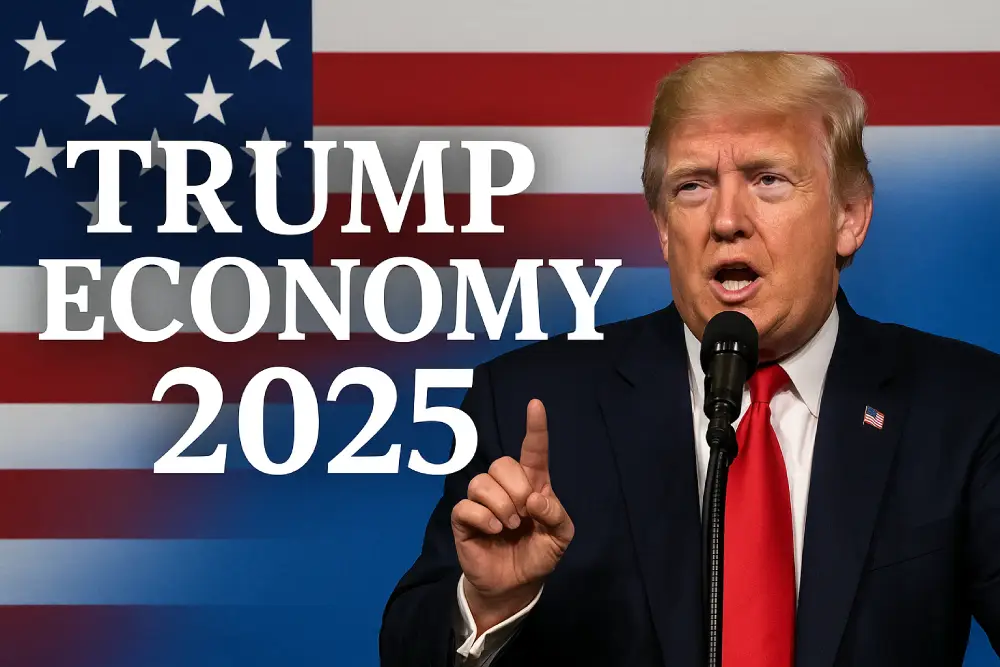
The Trump economy 2025 has quickly become one of the most defining conversations in the United States this year. President Donald Trump returned to office promising to “restore affordability,” rebuild economic confidence, and reverse the effects of years of elevated inflation. His speeches often highlight falling inflation rates, stronger job markets, and renewed consumer optimism. Yet when you look beyond the podium and into everyday households, a more complicated story emerges.
Across the country, Americans continue to express frustration about the cost of living. Rent remains high, groceries take a larger portion of paychecks, child-care costs are overwhelming, and borrowing has become more expensive due to high interest rates. While economic data shows improvement in certain areas, millions of households still feel the strain of several years of price increases.
Understanding why this disconnect exists requires looking closely at the numbers, the policies, and the realities Americans face. The result is a landscape that is improving on paper but still challenging in practice.
What the Latest Trump Economy 2025 Data Shows

The most widely recognized measure of inflation, the Consumer Price Index (CPI), published by the U.S. Bureau of Labor Statistics, reported around 3.0% year-over-year inflation in September 2025. This marks progress from the higher peaks seen in earlier years, but it remains above the Federal Reserve’s 2% target. More importantly, core categories such as food, housing, and services continue to rise.
Food prices climbed nearly 3% over the past 12 months, with noticeable increases in grocery staples. Gasoline rose over 4% in a single month, reflecting volatility in global energy markets. Housing costs also remain elevated, contributing significantly to the overall inflation burden.
The administration points out that inflation has fallen significantly from previous years, and technically, that is true. However, even moderate inflation hurts when it comes after two to three years of aggressive price increases. Most households don’t feel relief simply because inflation slowed; the prices themselves remain historically high.
Consumer polling reinforces this point. In a 2025 national survey, nearly three-quarters of Americans said their monthly expenses increased by at least $100 compared to the prior year. This number is especially impactful because even modest increases strain households that already allocate most of their income to necessities.
Also Read: Spurs vs Pelicans: Complete Game Analysis, Stats, and What to Expect
Everyday Expenses in the Trump Economy 2025
Housing Costs in the Trump Economy 2025
The cost of housing has become one of the most persistent pain points for Americans. High mortgage rates have drastically reduced affordability. Even individuals with stable incomes find the housing market difficult to enter. A major housing report from 2025 noted that more than 75% of homes are now unaffordable for median-income buyers, a stark contrast from conditions a decade ago.
Renters aren’t feeling relief either. While rental inflation has slowed in some regions, the overall cost remains significantly higher than it was before 2021. In major cities such as New York, Los Angeles, and Miami, even basic apartments consume 40–50% of renters’ incomes.
The United States housing market exemplifies the deeper issue: slowing inflation does not reverse accumulated price increases. Once rent or home prices climb to record highs, they rarely go back down.
Food and Groceries Under the Trump Economy 2025
Grocery prices are one of the clearest examples of “sticky inflation.” Even as inflation cools statistically, the price of food continues to rise—just more slowly. Families report paying more for essentials such as eggs, bread, vegetables, pasta, meat, and dairy compared to two years ago.
This reality forces many families to switch to cheaper brands, reduce variety in their diets, or rely more on discount retailers. Food inflation hits low-income and middle-income households hardest because it consumes a larger share of their total income.
Child Care Costs in the Trump Economy 2025
Child-care costs in the United States have reached historic highs, averaging over $13,000 per child per year. That number is more than annual in-state college tuition in many states. Reports show families paying $400–$500 per week for child care, making it one of the largest expenses for working parents.
These costs influence major life decisions. Many parents delay having additional children, reduce working hours, or restructure their careers entirely because child care consumes such a large portion of their income.
Health Care Costs in the Trump Economy 2025
Health-care costs continue to climb steadily. Higher insurance premiums, rising prescription prices, and increased out-of-pocket expenses all add pressure. Although the White House highlights improvements in affordability, millions of Americans still skip or delay care due to cost.
Health care is one of the least flexible expenses. When costs rise, families often face uncomfortable compromises—choosing between medical treatment and other essentials.
Utilities and Energy Prices in the Trump Economy 2025
Utility bills for electricity, natural gas, and heating have fluctuated, but most households report higher monthly expenses compared to pre-2021 levels. Transportation costs remain elevated due to energy market volatility and infrastructure strain, creating another area of persistent financial pressure.
How Americans Perceive the Trump Economy 2025
Public sentiment is shaped not only by data but by lived experience. According to surveys from the University of Michigan, consumer sentiment has improved slightly in 2025 but remains far from strong. Many Americans feel uncertain or pessimistic about their financial futures.
This sentiment aligns with consumer behavior. Studies show that Americans are cutting non-essential spending, delaying major purchases, and opting for lower-cost alternatives. These behavioral shifts are consistent with financial stress rather than confidence.
Household savings have also declined after being used to weather previous inflation spikes. As a result, even small increases in monthly expenses feel significant.
Trump’s Economic Message vs. Trump Economy 2025 Reality
President Trump’s message focuses heavily on the decline in inflation rates since he returned to office. The White House frequently highlights that inflation has fallen by more than half from its peak and that wages are beginning to rise.
However, contradictions remain:
Inflation is lower but still above target
Mortgage rates remain high
Essential expenses continue to grow
Tariff policies may increase the cost of imported goods
Wage growth is uneven across income groups
Job quality varies widely by region and industry
While the administration’s narrative is backed by real data, the broader economic environment still feels difficult for families who haven’t seen direct relief.
Why a Disconnect Exists in the Trump Economy 2025
This divide between economic messaging and lived experience comes down to several key factors.
First, inflation compounds over time. Even if inflation slows to 3%, it still builds on years of previous increases. A product that cost $10 three years ago may now cost $14, even though inflation is “lower.”
Second, essential costs rise faster than discretionary ones. Housing, groceries, health care, and child care make up the majority of spending for most households, and these categories are among the fastest to increase.
Third, high interest rates affect everything. Borrowing costs for homes, cars, business loans, and credit cards remain elevated. This reduces household purchasing power and increases financial stress.
Fourth, wage growth does not match cost growth. While some industries report rising wages, many workers see only modest increases that fail to keep up with inflation.
Finally, regional differences amplify the disconnect. Someone living in rural Kansas experiences the economy differently from someone in San Francisco or Boston.
Economists’ Predictions for 2026 and the Trump Economy 2025 Outlook

Economists across institutions, including Deloitte, say the U.S. economy is likely to see moderate growth in 2026 but warn of several ongoing risks. These include inflation volatility, global supply-chain instability, and tariff impacts on import prices.
Experts also note that CPI does not fully capture the real cost of living. For example, homeownership becomes more expensive when interest rates rise, even if housing prices stabilize. This mismatch makes affordability harder to measure through traditional inflation data alone.
Analysts at the International Monetary Fund warn that geopolitical tensions could affect global markets, contributing to potential spikes in energy prices or trade disruptions—both of which directly influence U.S. household budgets.
Also Read: Stock Market Crash: Causes, Warning Signs, History, and How Investors Can Protect Their Money
What the Trump Economy 2025 Means for American Families
For the average American household, the economic reality of 2025 is complex. Some indicators show genuine improvement, but core living costs remain high.
Middle-class families struggle with affordability
Young adults find homeownership increasingly unattainable
Parents face heavy child-care expenses
Retirees worry about savings not keeping pace with inflation
Borrowing remains expensive due to high rates
These challenges shape how Americans feel about the economy, regardless of official claims that conditions are improving.
Conclusion: The Trump Economy 2025 Remains a Split Reality
The Trump economy 2025 presents a divided picture. Inflation is lower, wages show improvement, and job markets remain resilient. Yet millions of Americans continue to face high living costs, expensive borrowing, and depleted savings.
The question is not whether the economy is improving on paper—but whether Americans can feel it in their daily lives. Until essential costs come down, many will continue to experience the economy as strained, regardless of national statistics.
Real recovery requires more than numbers. It requires relief that families can feel.

Sundhanshu Pathania works as a content analyst and writer at Multi News Hub. He focuses on analyzing news trends and writing articles related to global affairs, technology updates, sports, and trending topics.
His role involves reviewing multiple news sources, understanding search behavior, and presenting information in a clear, reader-friendly format. He contributes to the platform by researching topics and ensuring factual clarity in published content.
5 thoughts on “Trump Economy 2025: Why Millions of Americans Still Feel Financial Pressure”