
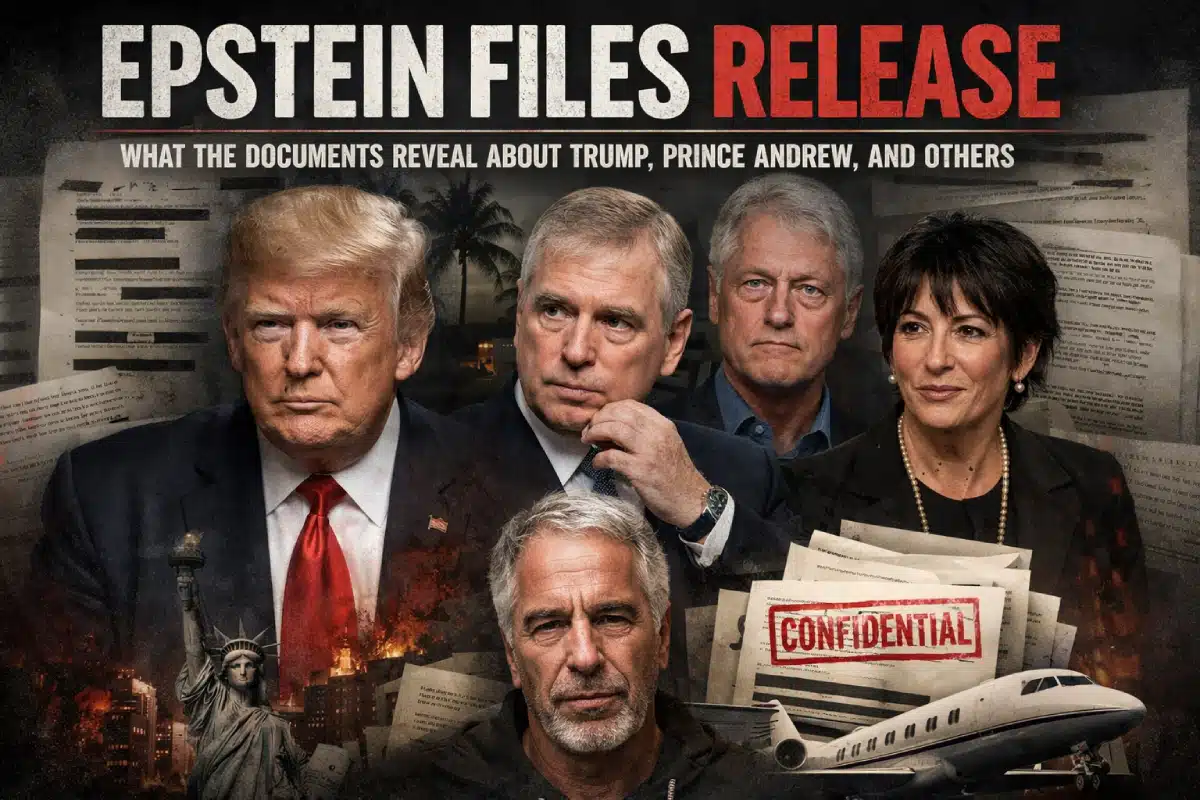
The recent release of nearly 30,000 pages of documents known as the Epstein Files has reignited public interest in one of the most disturbing criminal cases of our time. On December 23–24, 2025, the U.S. Department of Justice made public its largest disclosure yet in the ongoing investigation into the late financier and convicted sex offender Jeffrey Epstein. These Epstein Files reveal a complex web of information detailing Epstein’s criminal activities, his powerful associates, and the extensive investigations that followed his death. Understanding what the Epstein Files expose and just as importantly, what they do not has become essential for anyone seeking clarity on this sprawling and deeply troubling case.
Who Was Jeffrey Epstein and Why Do These Files Matter?
Jeffrey Epstein was a financier who cultivated relationships with some of the world’s most powerful individuals before his arrest and subsequent death in 2019. Convicted in 2008 of soliciting prostitution from a minor, Epstein served only 13 months in a work-release program a sentence widely criticized as extraordinarily lenient. His 2019 arrest on federal charges of sex trafficking minors opened a new chapter in the case, but his death by apparent suicide in a Manhattan jail cell left many questions unanswered.
The release of these files represents the government’s effort toward transparency in a case that has generated enormous public interest and numerous conspiracy theories. The documents include FBI investigation records, witness interviews, flight logs, email correspondence, and various other materials collected during the multi-year investigation. According to the Department of Justice, the release serves the interests of legal transparency while maintaining protections for Epstein’s victims.
Source: Email by ‘A’ from ‘Balmoral’ asked Ghislaine Maxwell for ‘inappropriate friends’, Epstein files show
What the Latest Document Release Actually Contains
The December 2025 release marks the largest single disclosure of Epstein-related documents to date. Unlike previous releases that focused primarily on civil litigation records, this tranche comes directly from the Department of Justice’s criminal investigation files. The documents span several decades and include materials from the 1990s through the early 2020s.
Trump References and the DOJ Response
One of the most widely reported aspects of this release involves references to Donald Trump, who is mentioned numerous times throughout the documents. However, the Department of Justice has been clear in its characterization of these references. According to official statements, the files contain “untrue and sensationalist claims” about Trump that were submitted to the FBI shortly before the 2020 election.
The DOJ emphasized that these allegations were investigated and found to be unfounded and false. The department stated that the records were being made public in the interests of legal transparency, with appropriate protections in place for Epstein’s victims. One specific detail that has received attention is an email from a prosecutor documenting flights that Trump took on Epstein’s private jet during the 1990s, though these flights occurred years before any known criminal activity.
This distinction is important: appearing in the files does not indicate wrongdoing. The documents contain information about hundreds of individuals, many of whom had legitimate professional or social connections to Epstein before his criminal activities became known.

Image credit: timesofindia.indiatimes.com
The Balmoral Email and Ghislaine Maxwell
Another significant revelation from the files involves an email from someone using the alias A from Balmoral asking Ghislaine Maxwell about inappropriate friends. The email reportedly asked: Have you found me some new inappropriate friends?” with the sign off reading See ya A xxx.
The email was sent from an address using the alias “The Invisible Man a pen name that also appeared alongside a separate email address listed in Epstein’s phone book as “Duke of York.” This individual also reportedly discussed “girls” on a Peru trip in emails with Maxwell. These communications are part of the evidence documenting how Epstein’s network operated and how associates may have been involved in facilitating his criminal activities.
Ghislaine Maxwell, Epstein’s longtime associate, was convicted in 2021 on five counts related to sex trafficking and is currently serving a 20-year prison sentence. The newly released documents provide additional context about her role in Epstein’s operation and the communications that facilitated his crimes.
Also read: Vince Zampella: The Visionary Behind Call of Duty and Apex Legends
Understanding the Scope of the Investigation
The Epstein case involves multiple overlapping investigations conducted by different agencies over many years. The FBI began investigating Epstein’s activities as early as the 1990s, though the most intensive investigative work occurred after his 2019 arrest on federal charges.
Multiple Jurisdictions and Legal Proceedings
The complexity of the Epstein case stems partly from the multiple legal proceedings it has generated. These include:
- The 2008 Florida state prosecution that resulted in Epstein’s controversial plea deal
- Federal civil rights investigations into whether that plea deal violated victims’ rights
- The 2019 federal criminal case that ended with Epstein’s death
- Multiple civil lawsuits filed by victims against Epstein’s estate
- The criminal prosecution of Ghislaine Maxwell
- Ongoing investigations into other potential co-conspirators
Each of these proceedings has generated its own set of records, and the recent release represents documents primarily from the FBI’s criminal investigation files. This means that additional documents may exist in other legal proceedings that have not yet been made public.
Source: Main Official Source – Epstein Files Page (DOJ)
What Investigators Were Looking For
The FBI’s investigation focused on several key questions: How extensive was Epstein’s sex trafficking operation? Who assisted him in committing these crimes? Were there other co-conspirators beyond Ghislaine Maxwell? How did Epstein evade serious consequences for so long despite evidence of criminal activity?
The released documents show that investigators conducted hundreds of interviews, reviewed financial records, analyzed travel patterns, and examined communications between Epstein and his associates. The files also reveal the challenges investigators faced, including witnesses who were reluctant to cooperate, destroyed evidence, and the difficulty of building cases involving events that occurred years or even decades earlier.
The Role of Powerful Associates
One of the most troubling aspects of the Epstein case has always been his connections to prominent individuals in politics, business, academia, and entertainment. The released files contain references to numerous public figures, but it’s crucial to understand what these references actually mean.
Clarifying Association vs. Implication
Simply appearing in Epstein’s records or even having social contact with him does not indicate involvement in or knowledge of his crimes. Epstein deliberately cultivated relationships with influential people, often presenting himself as a legitimate financier and philanthropist. Many individuals who had professional or social interactions with Epstein had no knowledge of his criminal activities.
The files do, however, provide insight into Epstein’s social network and how he used legitimate connections to build credibility and access. Investigators examined these relationships to determine whether any individuals assisted Epstein in his crimes, had knowledge of illegal activities, or could provide information about his operations.
Flight Logs and Their Limitations
Flight logs from Epstein’s private aircraft have received enormous attention, but these records have significant limitations as evidence. Being a passenger on Epstein’s plane does not indicate involvement in or knowledge of criminal activity. Many legitimate business and philanthropic activities were conducted through these flights.
However, the flight logs are valuable investigative tools. They help establish timelines, corroborate witness statements, and identify patterns of travel that may be relevant to understanding Epstein’s operations. The logs show that Epstein frequently traveled between his properties in New York, Florida, New Mexico, and the Caribbean, often with various associates and guests.
Protecting Victims While Pursuing Transparency
One of the most sensitive aspects of releasing these documents involves balancing public interest in transparency with the need to protect Epstein’s victims. The Department of Justice has stated that it implemented protections for victims’ identities and privacy in these releases.
The Complexity of Victim Testimony
The files include information from victim interviews, but these materials have been redacted to protect identities. Victims in the Epstein case face unique challenges. Many were minors when the abuse occurred, and coming forward requires revisiting traumatic experiences. Some victims have chosen to speak publicly about their experiences, while others have sought to maintain their privacy.
The legal system has struggled with how to handle these cases, particularly given the passage of time between many of the crimes and the investigations. Statutes of limitations, evidentiary challenges, and the death of the primary perpetrator have all complicated efforts to achieve justice.
Also read: Jaguars vs Broncos: A Complete Guide to This Classic NFL Matchup
The Victims Compensation Fund
Following Epstein’s death, his estate established a victims’ compensation fund to provide financial compensation to those who were abused. As of the most recent reports, the fund has paid out more than $125 million to over 135 claimants. While financial compensation cannot undo the harm caused, it represents one mechanism for acknowledging victims’ suffering and providing some measure of restitution.
Conspiracy Theories vs. Documented Facts
The Epstein case has generated numerous conspiracy theories, some of which have obscured the documented facts. It’s important to distinguish between evidence-based reporting and speculation.
What We Know for Certain
The documented facts of the case include:
- Epstein was convicted in 2008 of soliciting prostitution from a minor
- He was arrested in 2019 on federal charges of sex trafficking minors
- He died by apparent suicide in federal custody in August 2019
- Ghislaine Maxwell was convicted in 2021 of facilitating Epstein’s crimes
- Multiple women have credibly accused Epstein of sexual abuse
- Epstein maintained properties in multiple locations that were used in his criminal activities
- He cultivated relationships with numerous prominent individuals
Separating Speculation from Evidence
Many theories about the Epstein case involve speculation about his death, allegations about specific individuals, and claims about the scope of his activities that go beyond documented evidence. While healthy skepticism about powerful institutions is reasonable it’s important to base conclusions on verifiable facts rather than speculation.
The released documents provide the most comprehensive look yet at what investigators actually found, and they should be the primary basis for understanding the case rather than unverified claims circulating online.
Source: Broader Background on Epstein Investigations
The Broader Implications for Justice and Accountability
The Epstein case raises profound questions about how the justice system handles cases involving wealthy and connected defendants. The 2008 plea deal that allowed Epstein to avoid serious federal charges has been widely criticized as an example of a two-tiered justice system.
Lessons for the Criminal Justice System
Several reforms have been proposed or implemented in response to failures in the Epstein case:
- Stricter oversight of plea agreements involving sex crimes, particularly those involving minors
- Greater protection for victims’ rights in the criminal justice process
- Improved protocols for high-profile inmates in federal custody
- Enhanced scrutiny of arrangements that allow defendants to serve sentences in work-release programs
The Epstein case has also highlighted the importance of believing and supporting victims who come forward, even when they are accusing powerful individuals. The courage of Epstein’s victims in continuing to seek justice despite enormous obstacles has been central to advancing investigations.
The Ongoing Nature of the Investigation
While Epstein is dead and Maxwell is imprisoned, the investigation into potential co-conspirators continues. The Department of Justice has indicated that it remains committed to pursuing anyone who may have assisted Epstein in his crimes. The release of these documents may generate new leads or encourage additional witnesses to come forward.
How to Access and Interpret the Documents
For those interested in examining the documents themselves, they are available through official Department of Justice channels. However, working through nearly 30,000 pages of legal documents requires time and context.
Also read: Jake Paul Fight Time: Complete Guide to Paul vs Joshua Event December 2025
Resources for Understanding the Files
Several organizations and journalists have been working to analyze and summarize the documents:
- Major news organizations have reporters dedicated to reviewing the files and providing context
- Legal experts have been analyzing the materials to explain their significance
- Victim advocacy groups have been monitoring the releases to ensure victim protections are maintained
- Academic researchers are studying the documents to understand patterns in sex trafficking cases
When reviewing information about the files, it’s important to rely on reputable sources that distinguish clearly between documented facts and analysis or interpretation.
Conclusion
The release of nearly 30,000 pages of Epstein-related documents represents a significant moment in one of the most disturbing criminal cases in recent history. These files provide unprecedented insight into Jeffrey Epstein’s criminal activities, the investigation that followed his death, and the complex web of relationships he cultivated over decades.
While the documents contain references to many prominent individuals, including President Donald Trump, it’s crucial to understand that the Department of Justice has characterized some claims in the files as unfounded and that appearing in the records does not indicate wrongdoing. The files show both the extent of Epstein’s crimes and the challenges investigators faced in building cases and identifying all those who may have assisted him.
The Epstein case raises profound questions about justice, accountability, and how society protects vulnerable individuals from exploitation. The courage of his victims in coming forward has been essential to advancing investigations and preventing Epstein from continuing his crimes. As the investigation continues and additional information may be released, understanding the documented facts rather than speculation and conspiracy theories remains essential.
This case serves as a reminder of the importance of believing victims, holding powerful individuals accountable, and ensuring that the justice system works fairly regardless of wealth or connections. The released documents represent a significant step toward transparency, but the full story of Jeffrey Epstein’s crimes and all those who may have assisted him may never be completely known.

Sundhanshu Pathania works as a content analyst and writer at Multi News Hub. He focuses on analyzing news trends and writing articles related to global affairs, technology updates, sports, and trending topics.
His role involves reviewing multiple news sources, understanding search behavior, and presenting information in a clear, reader-friendly format. He contributes to the platform by researching topics and ensuring factual clarity in published content.
2 thoughts on “The Epstein Files Explained: What the Latest DOJ Documents Reveal”